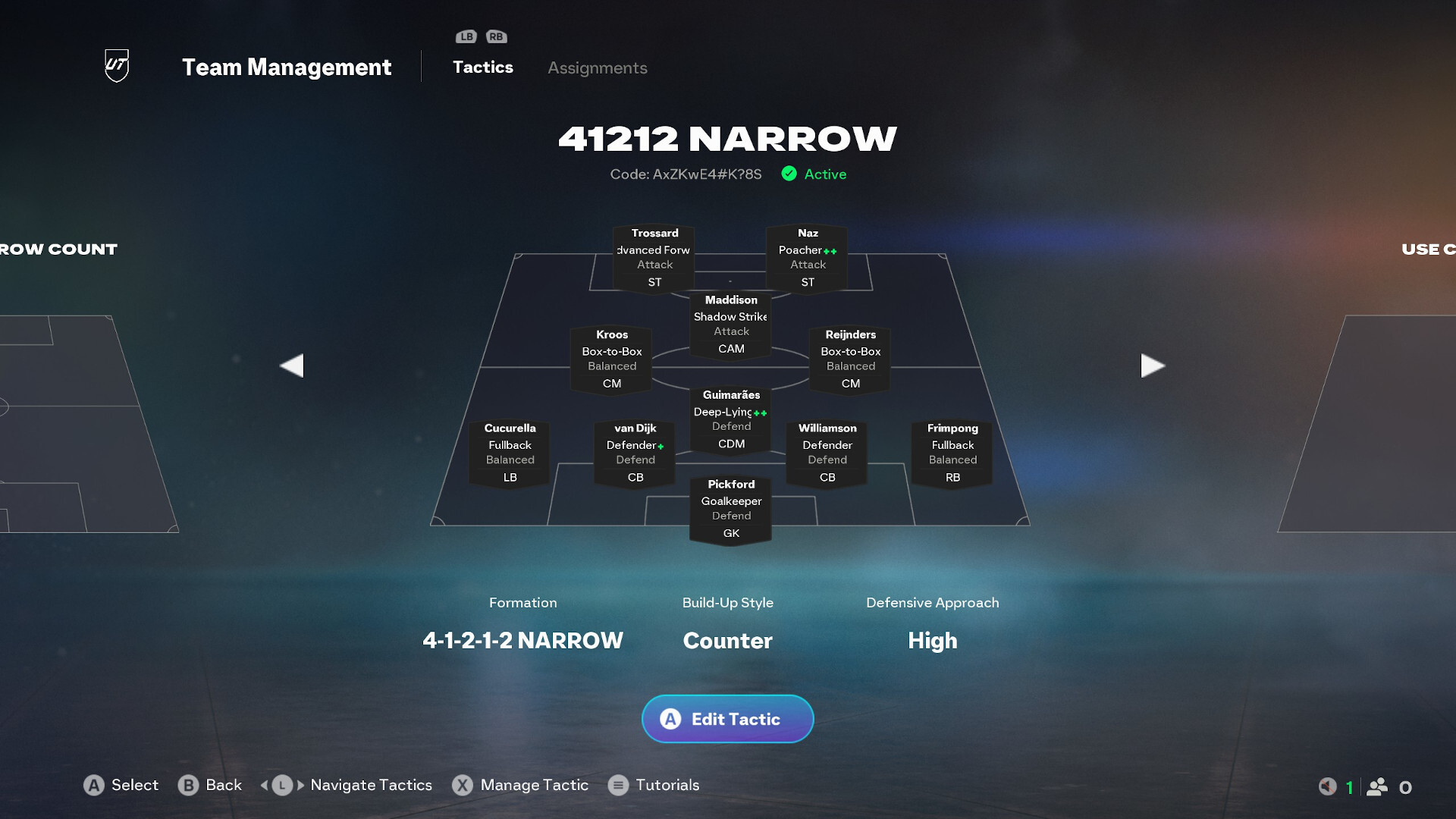
Custom tactics in EA Sports FC 26 aren’t just cosmetic sliders — they directly change how your team behaves in every phase of play. At higher divisions, tiny tactical adjustments can completely shift match momentum.

One thing I personally like doing is going ultra-defensive when I’m leading by two goals — but instead of just sitting deep, I set up for counter-attacks with rapid players up front. It’s safer than chasing more goals, yet still deadly on the break.
Let’s break down what actually changes gameplay.
You Can Import Custom Tactic Codes

A big addition in recent versions is the ability to plug in custom tactic codes shared by other players.
Instead of manually adjusting every slider, you can:
- Enter a shared tactic code
- Load it instantly
- Test it in Rivals, Seasons, or Champs
This makes experimenting much easier. If a top player shares a 4-2-3-1 press system, you can load it in seconds and tweak from there.
That said, blindly copying tactics rarely works long-term. What matters is understanding why they work — and adjusting them to suit your playstyle.
Build-Up Play: Controlling the Tempo
Your build-up setting determines how your team transitions from defence to attack.
- Slow Build-Up – Controlled possession, safer passing options.
- Balanced – Reactive AI movement.
- Fast Build-Up – Immediate forward runs, higher risk.
If I’m protecting a lead, I avoid fast build-up. But when I win the ball deep with pacey forwards ready to run, quick vertical transitions can destroy opponents who’ve overcommitted.
Chance Creation & Attacking Width
Width affects spacing — and spacing creates opportunities.
- Narrow width compresses central play.
- Wide setups stretch defensive lines.
If you use rapid wingers or overlapping fullbacks, wider settings can open channels for cutbacks and through balls. Even increasing width slightly can completely change passing lanes.
Defensive Width & Depth: The Real Match Deciders

These sliders have the biggest visible impact on gameplay.
Defensive Width
- Lower = compact centre, risk on wings.
- Higher = better wing coverage, more central gaps.
Defensive Depth
- Low depth (30–40) = deep block.
- Medium (45–55) = balanced.
- High (60–75) = aggressive line and offside traps.
When I’m two goals ahead, I drop depth and tighten shape. But here’s the key: I keep two rapid attackers high up the pitch. The opponent pushes forward, leaves space behind, and one quick through ball flips defence into attack instantly.
Ultra-defensive doesn’t mean passive — it means controlled.
Pressing Styles & Stamina Management
Pressing settings affect both AI movement and stamina.
- Balanced – Most stable.
- Press After Possession Loss – Short, aggressive bursts.
- Constant Pressure – Intense but drains stamina quickly.
- Drop Back – Structured, compact shape.
Constant Pressure looks powerful, but stamina loss can cost you late goals. Smart pressing beats constant pressing.
Why Small Tweaks Feel Massive

Moving a slider by 5–10 points can:
- Change recovery runs
- Alter passing angles
- Adjust defensive compactness
- Affect AI attacking movement
That’s why understanding the system matters more than copying it.
Final Thoughts
Custom tactics in EA FC 26 aren’t just background settings — they’re your identity on the pitch.
Yes, you can load shared tactic codes instantly.
Yes, you can copy meta setups.
But the real advantage comes from understanding:
- How depth changes space
- How width alters passing lanes
- How pressing impacts stamina
- And how to defend deep while countering with pace
For me, the sweet spot is simple:
Defend smart. Stay compact. Break fast.
Master the sliders, and you’ll control the game — not just react to it.