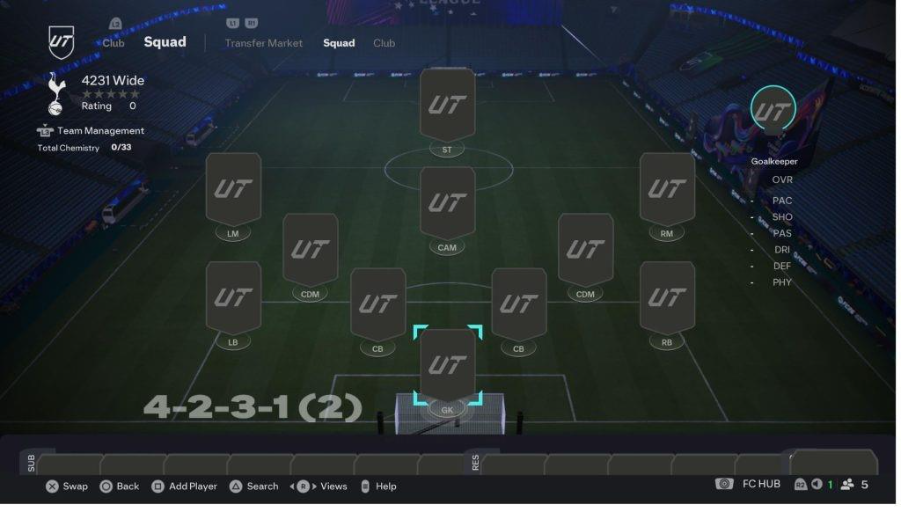

In competitive football games like EA FC, the term “meta” gets thrown around constantly. The meta is essentially the collection of tactics, formations, and player styles that the community believes are the most effective at a given time. If you play enough Weekend League or high-division rivals matches, you’ll quickly notice patterns: certain formations dominate, certain types of players are everywhere, and certain attacking patterns repeat match after match.
But an important question every competitive player eventually asks is this: should you always follow the meta, or is there value in doing something different?
The answer is more nuanced than simply copying what everyone else is doing.
Why the Meta Exists
First, it’s important to understand why the meta forms in the first place.
Competitive players constantly test the game’s mechanics. Over time, patterns emerge. Certain formations naturally exploit how the game engine handles space, pressing, and defensive AI. For example, a formation with multiple central attackers might work better because defenders struggle to track overlapping runs. Or a tactic with aggressive pressing might be powerful because of how quickly the game rewards interceptions.
As a result, many players gravitate toward the same setups. The logic is simple: if something works consistently at the highest level, it’s probably worth using.
Following the meta also reduces the learning curve. Instead of experimenting endlessly, you’re starting with a blueprint that’s already proven effective.
However, there’s a downside.
When everyone plays the same way, matches can become predictable.
The Power of the Unexpected

Sometimes, the biggest advantage in competitive play is simply being different.
I’ve experimented with unconventional formations more than once, often just to see what would happen. One of the most memorable examples was using a 3-5-2 setup in a Weekend League run. At the time, most players were running narrow four-back formations designed to dominate the middle of the pitch.
The 3-5-2 caught a lot of opponents completely off guard.
Because the formation naturally provides width through wing-backs while maintaining a strong central midfield, it forced opponents to constantly adjust their defensive shape. Players who were comfortable defending against the standard meta formations suddenly had to deal with overlapping runs and overloads they weren’t used to.
The result wasn’t just tactical success — it was psychological. Opponents often struggled because they hadn’t practiced defending against something unusual.
When You Should Follow the Meta

Despite the benefits of innovation, there are definitely situations where following the meta is the smarter choice.
If you’re trying to climb divisions quickly or compete seriously in Weekend League, using a proven setup can save you a lot of frustration. Meta formations usually offer balanced defensive coverage, efficient attacking patterns, and predictable player positioning.
They’re popular for a reason.
For newer or intermediate players especially, sticking close to the meta allows you to focus on improving core gameplay skills like defending, passing, and finishing instead of constantly tweaking tactics.
Think of meta formations as a reliable baseline.
When Innovation Pays Off
There are also moments when stepping away from the meta can give you a real advantage.
One of the biggest is when your opponents are overly familiar with the common setups. High-level players spend countless hours defending against the same formations, so throwing something unexpected at them can disrupt their rhythm.
Innovation can also help if the meta doesn’t suit your playstyle.
Some players prefer possession-based football with slower build-up. Others thrive on fast counters or wide attacking play. If the current meta doesn’t align with how you naturally play, forcing yourself into it can actually make you worse.
In those cases, adapting a formation that fits your strengths often produces better results than blindly copying the community.
Finding the Balance
The most effective approach is usually somewhere in the middle.
Instead of completely ignoring the meta or following it blindly, try understanding why certain tactics work and then adapting them to your own preferences.
Maybe you keep the defensive structure of a popular formation but tweak the attacking instructions. Maybe you use a different formation entirely but borrow certain tactical elements from the meta.
The key is flexibility.
Football games evolve constantly, especially with patches and gameplay updates. Players who can adapt — both tactically and mentally — are the ones who stay competitive over time.
At the end of the day, the meta is a tool, not a rulebook.
Sometimes the smartest move is to follow the crowd. Other times, the biggest advantage comes from doing something nobody expects.