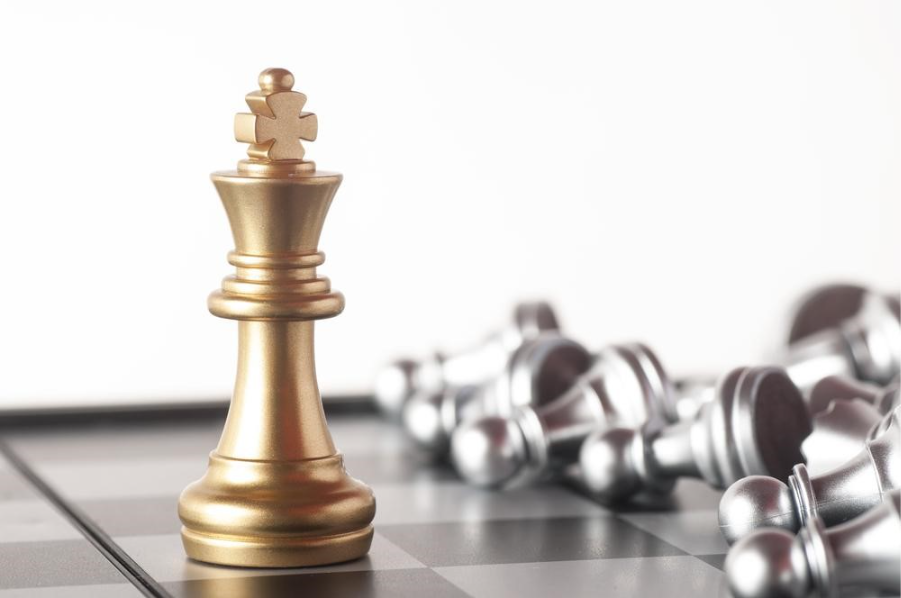

In the world of chess, there is a painful phenomenon every player knows: the “won game” that somehow ends in a draw—or worse, a loss. Having an advantage is one thing; converting it is an entirely different skill set. It requires a shift in mindset from the creative aggression of the middlegame to the cold, clinical precision of the endgame.
If you find yourself up a pawn or possessing a superior structure, the game isn’t over. It has simply entered a new phase where your opponent’s only goal is to “muddy the waters.” Here is how you dry those waters up and steer the ship home.
The Power of Simplification: A Lesson from My Youth
When I was younger, I remember a specific tournament game where I felt the pressure of a looming draw. I had outplayed my opponent in the opening and managed to go up two clean pawns. I knew I had a winning advantage, but I also knew that the more pieces stayed on the board, the more chances my opponent had for a “swindle” or a lucky tactic.
I remembered a golden rule: “When up material, trade pieces.”
I executed this with surgical focus. I systematically hunted down every exchange. I traded Queens to kill any attacking chances, then both pairs of Rooks to stop any counter-play on the open files. Finally, we reached a King and Pawn endgame. Because I had traded the pieces but kept my pawns, the win became an elementary exercise. My opponent had no “firepower” left to stop my march. I promoted one of my extra pawns to a Queen and forced the resignation.
The lesson was clear: Simplification is the ultimate weapon of the winning side. It strips the defender of their tools and leaves them with nothing but a losing math problem.
1. The Strategy of Trading

The general rule remains true: if you are up material, you want to trade pieces, not pawns. * Why pieces? Every piece left on the board is a source of “counterplay.” A lone Queen can deliver perpetual checks; a lone Knight can find a fork. By removing pieces, you reduce the opponent’s ability to create chaos.
- Why keep pawns? You need pawns to win. If you trade all the pawns off and are left with just a Bishop or a Knight, you can’t checkmate. Keep your pawns on the board so one of them can eventually promote.
2. The Principle of Two Weaknesses
If your opponent is a strong defender, they will park their pieces on the best squares to stop your advantage from growing. If you only attack one point, they might hold.
The Principle of Two Weaknesses states that to win a “won” game, you must create a second front. If you are attacking a weak pawn on the queenside, start an advance on the kingside. Your opponent’s pieces can usually defend one weakness, but they will eventually be stretched too thin to defend two. They will “overload,” and one of the fronts will collapse.
3. Do Not Rush
Grandmaster Viktor Korchnoi once said, “The hardest thing in chess is to win a won game.” The biggest enemy of conversion is impatience.
When you have a small edge—perhaps a better-placed Knight or a lead in development—don’t feel the need to end the game in three moves. If you rush, you create “tactical noise” that helps the defender. Instead, practice Prophylaxis: identify your opponent’s only way back into the game and take that option away first. Once they have no moves left to improve their position, you can slowly squeeze.
4. Transitioning to the Endgame

Most small edges are converted in the final phase. To do this effectively, you must master three core concepts:
- King Activity: In the opening and middlegame, the King is a liability to be hidden. In the endgame, the King is an attacking piece. Bring it to the center!
- Passed Pawns: A passed pawn (one with no enemy pawns in front of it or on adjacent files) is a “criminal” that must be escorted to the 8th rank.
- The 7th Rank: If you have Rooks, getting one to the 7th rank (the “pig on the 7th”) is often enough to sweep up pawns and end the game.
Conclusion: Clinical Over Emotional
Converting an advantage is about being clinical. You must suppress the urge to be “fancy” and instead focus on the most efficient, risk-free path. Do what I did in that tournament game: eliminate the opponent’s chances through smart trades, simplify the position, and let the sheer weight of your extra material finish the job.