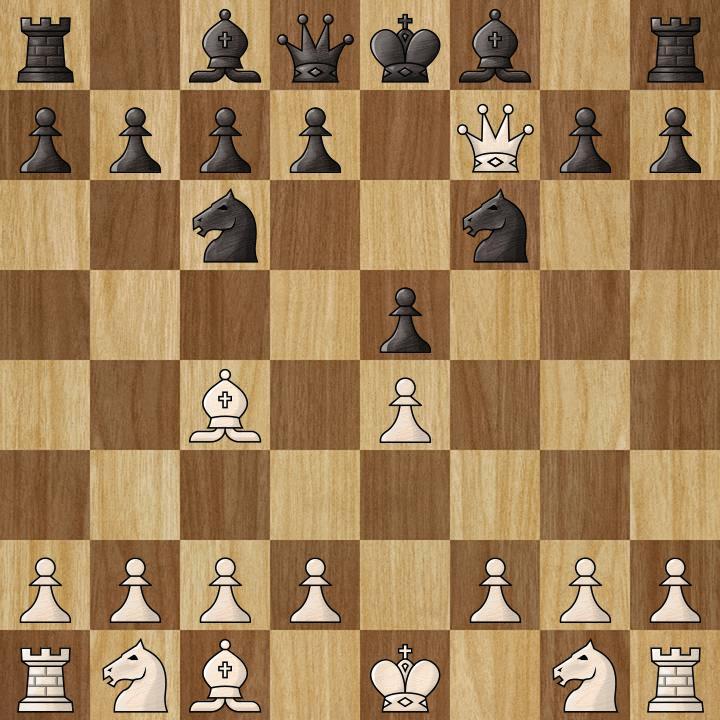

If you have just started playing chess, you have probably heard about the Scholar’s Mate. It is one of the fastest checkmates in the game. Many new players also fall for it very quickly.
With smart queen and bishop coordination, one player can launch a sudden attack before the opponent has time to react. So, while the tactic looks simple, it teaches some very important chess lessons.
In this guide, you will learn exactly how the Scholar’s Mate works, how to stop it, and why every beginner should know it.
What is the Scholar’s Mate in Chess?
The Scholar’s Mate focuses on a weak spot near the king. It allows White to deliver checkmate in only four moves.
This opening trap targets the weak f7 square near Black’s king. Since only the king protects that pawn at the start of the game, it becomes an easy target. White usually attacks it with the queen and bishop working together.
The Basic Scholar’s Mate Moves
The classic Scholar’s Mate follows this move order:
- e4 e5
- Bc4 Nc6
- Qh5 Nf6
- Qxf7#
White begins by moving the king’s pawn to control the center and open lines for the bishop and queen. Black responds in the same way, fighting for central space and preparing piece development.
Next, White develops the bishop to c4. This is an active square because the bishop immediately points toward the weak f7 pawn. Black usually continues with Nc6, developing the knight and protecting the e5 pawn. So far, both sides seem to follow standard opening principles.
However, things become dangerous when White plays Qh5. Suddenly, the queen and bishop work together to attack f7. Since the f7 pawn is only protected by the king early in the game, it becomes a vulnerable target.
Many beginners naturally respond with Nf6 to attack the white queen and gain tempo. Unfortunately, this move allows White to play Qxf7#, delivering a checkmate immediately. The queen attacks the king directly, while the bishop on c4 protects the queen. Because of this coordination, Black’s king cannot escape or capture the attacking queen.
How to Defend Against Scholar’s Mate
One of the safest defenses is playing g6. This move attacks the white queen and blocks the attack on f7 at the same time. In addition, it helps Black prepare kingside development and castling.
Another good response is Nf6. Instead of playing passively, Black develops a knight and challenges White’s queen early. Even if White grabs a pawn, Black usually gains faster development and active pieces in return.
Some players also defend with Qe7 or Qf6. Both moves protect f7 immediately. However, they also create development problems because the queen blocks other pieces.
Why Scholar’s Mate Often Fails
The Scholar’s Mate mainly works against beginners. Stronger players know how to react calmly. Once Black develops pieces and attacks the queen, White can quickly lose momentum.
In fact, bringing the queen out too early often becomes a problem. The queen turns into a target, while Black develops naturally and gains control of the board.
That is why many chess players consider the Scholar’s Mate a dubious strategy. It may win quick games against inexperienced opponents, but it rarely succeeds against prepared players.