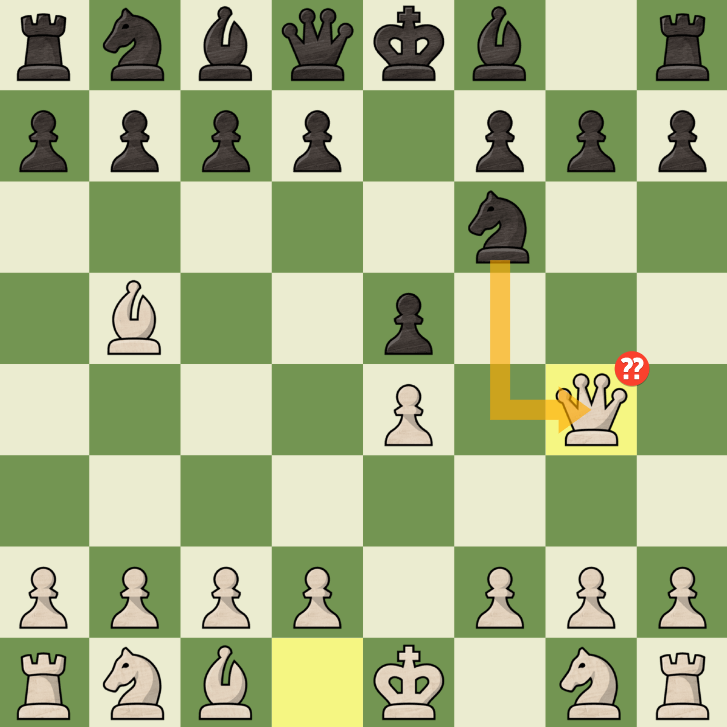

Every chess player dreams of reaching a higher rating, but one thing keeps most players stuck for years: blunders. The funny part? Most blunders are not complicated. They are simple moves that players completely overlook because they focus only on their own pieces.
The Golden Rule: Scan Forward Moves
Strong chess players think differently. Most beginners look at their own side of the board and think:
- Where should I move my Knight?
- Can I castle?
- Can I attack something?
But stronger players focus on the opponent’s side of the board. They constantly ask:
- How can I move forward and cause damage?
This small mindset shift can completely change your chess. To stop blundering in Chess, always scan for forward moves:
- Checks
- Captures
- Threats
- Attacking moves toward the opponent
Many players miss winning moves simply because they never look forward aggressively enough.
Why do most players miss tactics?
Imagine your opponent grabs a pawn. Many players instantly think: I should recapture. But sometimes there is a hidden checkmate or a stronger attack available.
This happens because players focus too much on fixing their own position instead of looking for active moves. If you want to stop blundering in Chess, you must flip the switch in your brain. Instead of asking: How do I defend?
Ask: What dangerous move can I play right now? That is how stronger players suddenly find forks, traps, and checkmates.
Most Blunders Are Forward Moves
Here’s the surprising truth: Most blunders are not deep combinations. They are simple forward moves that players never noticed.
- A Pawn pushes forward and traps a Bishop.
- A Queen jumps into the enemy position.
- A Rook suddenly delivers checkmate.
That’s it. Players often think they need thousands of puzzles to stop blundering in Chess, but puzzles alone are not enough if your thinking process stays the same.
Practice helps, but practising bad habits creates better blunders instead of better chess. Ask: What is my opponent’s most annoying move? Look for:
- Checks against your King.
- Captures on your pieces.
- Threats attacking your position.
- Forward moves on your side of the board.
This habit alone can help you stop blundering in Chess more than memorising ten opening lines. For example, maybe your Knight’s move attacks the enemy Queen. Sounds amazing, right?
But what if your opponent has checkmate in one? That happens all the time because players get excited about their own ideas and ignore enemy threats.
Stay Active Even After a Mistake
Here’s another important lesson. Even grandmasters blunder. The difference is that strong players keep fighting.
Many players make one mistake and mentally give up. Then they start playing lazy moves and lose quickly. But if you want to stop blundering in Chess, you also need the right mindset after mistakes happen. Keep creating problems for your opponent:
- Attack Pawns
- Push passed Pawns
- Create threats
- Complicate the game
Don’t Play on Autopilot
Autopilot chess is dangerous. When players move too fast, they stop checking threats and start making automatic moves. This is where most blunders happen. Slow down and scan the board:
- What moved?
- What changed?
- What is hanging?
- What forward move is dangerous?
And once you start seeing those hidden threats before they happen, chess becomes way more fun.