This is the 3rd and final part about Fossils and their Evolutions in Pokémon TCG Pocket. For the other Fossils that aren’t featured in this article do make sure to read Parts 1 and 2! In this part we’ll go over the last 3 Fossils that feature in the game, including the one Fossil that has a different Evolution to all the other Fossils that have featured in this series so far!
Jaw Fossil:

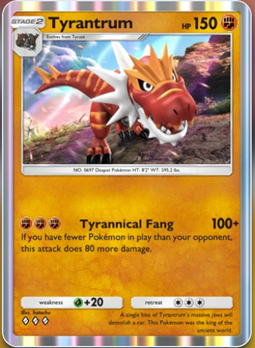
This Fossil evolves into Tyrunt, a Stage 1 Fighting Type Pokémon. Like the other Fossils that we’ve detailed in this series, Tyrunt has a very straightforward attack; it deals 60 damage for 2 Energy which compared to the other attacks from Stage 1 Pokémon so far it actually a little more powerful than average. This makes sense when you look at its Evolution, Tyrantrum. This Pokémon does a whopping 100 damage for 3 Energy but with an extra bonus; if you have fewer Pokémon in play than your opponent this attack does an extra 80 damage. 180 damage from a Pokémon that can be built like a tank! And this is discounting new cards that can help this Pokémon deal even more damage such as the Arena of Antiquity Stadium Card or the Korrina Trainer card. This isn’t even an EX Pokémon meaning that opponents only get 1 point for defeating it! However, you may need to put all your eggs in one basket with this Pokémon to get the extra attack bonus, but even without it Tyrantrum still deals 100 damage which can help decimate your opponent’s Pokémon in a couple of turns!
Sail Fossil:

This Fossil evolves into Amaura, a Stage 1 Water Type Pokémon. As is the case with all Stage 1 Pokémon in this series we’ve examined so far, this Pokémon has a simple attack; it deals 50 damage for 2 Energy. Its Evolution is a little more interesting however, since there’s a bonus that comes with a significant catch. Amaura’s evolution is Aurorus which deals 90 damage for 3 Energy. After this attack connects it makes your opponent’s Active Pokémon paralyzed, but on the flip side you must also discard 2 Water Energy from Aurorus. This is an attack that can be beneficial and detrimental. On the one hand, paralyzing your opponent’s Pokémon means that they can’t attack or retreat but it will be cured on the next turn. However, the 2 Energy that is required to be discarded to use this move can mean you’re stuck without being able to attack for your next turn. Paralysis can also be easily countered if your opponent has the right Pokémon Ability or the right Trainer card to heal paralysis. This Pokémon can still be useful but having another Pokémon that can give more Water Energy to Active Pokémon like Baxcalibur would be a good combo to keep the attack going.
Old Amber:

This Fossil is the one that we’ve been teasing throughout this series since it’s the most different compared to the other Fossils. This Fossil not only has a single Evolution to its name but it also has 2 different Evolutions of the same Pokémon to consider. Old Amber evolves into Aerodactyl, a Stage 1 Normal Type Pokémon, or a Fighting Type Pokémon which we’ll get into in a moment. The Normal Type Aerodactyl doesn’t actually have much to speak of; it does no damage for 2 Energy but it shuffles your opponent’s Active Pokémon back into their deck if you flip a coin and it turns up heads. All this can really do is annoy your opponent and that’s about it. But its Fighting Type Evolution is a lot more interesting and even more devastating. It does 80 damage for 2 Energy but its Ability can also prove to be annoying in a more effective way; as long as Aerodactyl EX is in play your opponent can’t evolve their Active Pokémon as long as it’s in the Active spot. This can be brutal since it could force your opponent to swap their Pokémon out for a weaker Pokémon, or if its on its own and can’t evolve any further it can potentially end the game! We recommend using Aerodactyl EX in your decks if you want to prevent your opponents from evolving their Pokémon whenever they want!
Throughout this series we’ve talked about lots of different types of Fossils and their respective Evolutions and abilities. Each Pokémon has their own strengths and weaknesses that can be helped if you create your decks to remove or reduce those weaknesses. All in all we hope that this has been a simple guide to all the different Fossils and their Evolutions and we hope that you can find a place in your decks for these cards to go!