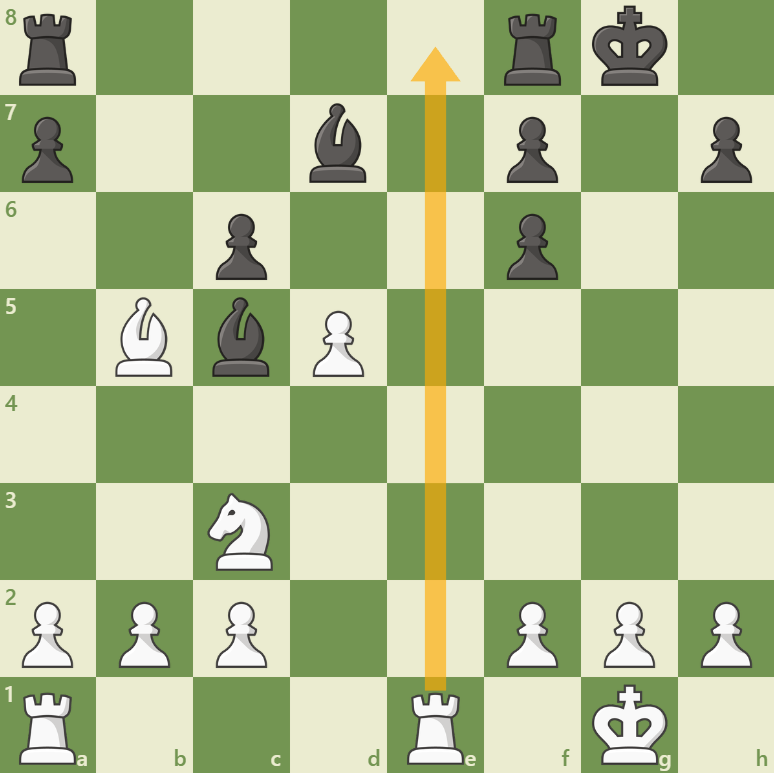

Open files are one of the most powerful strategic weapons in chess. Still, many beginners miss them. Instead, they rely only on tactics and direct attacks. However, enthusiasts know that controlling an open file can completely change the game outline.
An open file gives your rooks and queen more freedom to move. It often serves as a highway into enemy territory. Therefore, learning how to use them effectively can greatly improve your overall play.
In this guide, you will learn how to identify open files, control them, place your pieces effectively, and turn positional pressure into winning opportunities. So, let’s explore one of chess’s most important strategic concepts.
Why Open Files Matter
A rook on an open file often becomes much stronger than a rook trapped behind pawns.
Imagine a rook moving onto an open file in a rook endgame. Suddenly, it can penetrate to the 7th rank, attack pawns, and force the opponent’s king and rook into defense. That is why strong players fight for open files whenever they can.
Main benefits
- Better piece activity.
- Access to the opponent’s position.
- Pressure against weak pawns.
- Control of important ranks, especially the 7th and 8th.
The 7th Rank Is a Dream Target
When both rooks reach the 7th rank, the pressure can become overwhelming. The opponent may be forced into passive defense while your heavy pieces dominate the board.
What they can do
- Attack multiple pawns at once.
- Restrict the opponent’s pieces.
- Create mating threats.
- Support each other when doubled.
The 8th Rank Can Be Deadly
Control of an open file can also lead to powerful threats on the 8th rank. In many positions, a rook invasion on the 8th rank is more dangerous than simply winning a pawn. The opponent must constantly watch for mating patterns.
Common ideas
Back-rank mating attacks.
Constant checks against the king.
Paralyzing the opponent’s pieces.
Entry Squares Decide Everything
Here is the important lesson many players miss: an open file is useful only if you have entry squares.
Ask yourself
- Can my rook enter the opponent’s position?
- Are squares like d7, c7, or g7 available?
- Can the opponent’s king or pieces block those squares?
For example, if an enemy king controls all the entry squares on an open file, your rook may have nowhere to go. In that case, the file is far less valuable.
Look for entry squares before fighting for a file. If the opponent’s king or pieces control every entry square, the file may be less valuable than another open line with a clear invasion route.
Choosing the Right Open File
Sometimes you can fight for more than one open file. The best choice is usually the file with the better entry squares.
Suppose you can contest either the b-file or the g-file. If the opponent controls every entry square on the b-file, doubling rooks there may accomplish nothing. Meanwhile, if the g-file gives access to g7, then the g-file becomes the better target.
Always evaluate where your rook can go after winning the file, not just whether the file is open.
Final Thoughts
To utilize an open file effectively, follow four simple principles:
- Occupy the file with a rook.
- Double or triple heavy pieces when possible.
- Look for entry squares on the 7th and 8th ranks.
- Ignore files that offer no real penetration.