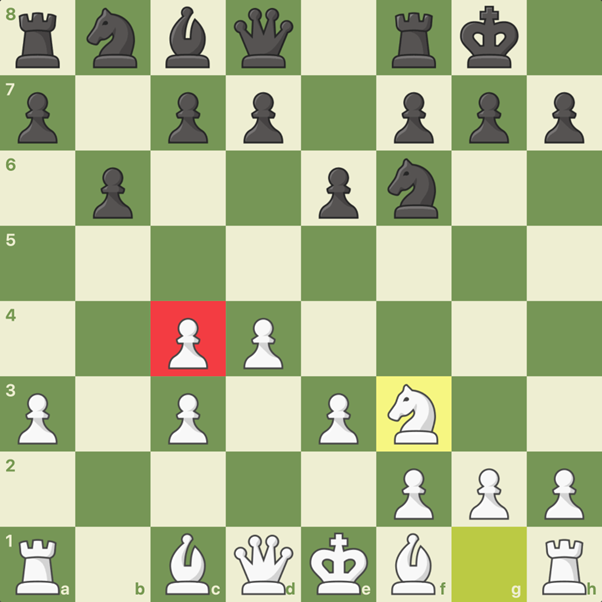
Chess isn’t just about flashy tactics — the forks, pins, and sneaky sacrifices. While those elements can win games instantly, positional play is what turns a good player into a great one. Positional understanding is about long-term planning, piece coordination, pawn structure, and controlling key squares.
Even in online chess today, with platforms like Chess.com making it easy to play fast games, positional principles remain the backbone of solid play. Streamers occasionally showcase spectacular tactics, but they only work because the underlying position is sound.
1. Understand Piece Activity
Active pieces are more powerful than high material alone. Ask yourself:
- Can each piece move freely?
- Are my pieces controlling important squares?
- Are my rooks on open files, bishops on long diagonals, and knights on outposts?
A bishop on an open diagonal or a knight on a strong central square can dominate the board, sometimes more than a queen trapped in a corner. Personally, I tend to value bishops slightly more than knights in these situations, as their long-range influence can dictate the flow of the game.
2. Pawn Structure is Key
Pawns are the skeleton of your position. Understanding pawn structures helps you plan both attack and defense:
- Isolated pawns: Can be weaknesses that opponents target.
- Doubled pawns: Often a structural liability but can sometimes control key squares.
- Passed pawns: Potentially decisive in the endgame; plan to advance them carefully.
Keeping your pawns connected and controlling the center gives your pieces the freedom to act effectively.
3. Control of Key Squares

In positional chess, some squares are more important than others:
- Outposts: Squares where a piece, usually a knight, cannot be attacked by pawns.
- Open files: Perfect for rooks and queens to exert pressure.
- Weak squares: Target squares in your opponent’s camp that cannot easily be defended.
Identifying and controlling these squares gives you a lasting advantage, often creating threats without direct attacks.
4. King Safety and Space
King safety isn’t just an opening concern. Even in the middlegame, exposed kings limit your options:
- Avoid unnecessary pawn moves in front of your king.
- Use your king’s safety to dictate which flank you can attack.
- Space advantage allows pieces to operate freely while restricting your opponent.
Controlling space is like controlling the tempo of the game: your pieces move where they want, and the opponent has fewer options.
5. Planning and Prophylaxis
Positional play involves planning several moves ahead and anticipating your opponent’s plans — a concept called prophylaxis:
- Ask: What threats does my opponent have next?
- Can I improve my position while stopping their ideas?
- Are there subtle moves that restrict their pieces?
Fischer’s games often highlight this: small, quiet moves that limit the opponent while improving his own position. Even without memorizing opening theory, thinking ahead strategically will pay huge dividends.
6. Piece Coordination
Tactics are most effective when pieces work together. In positional chess:
- Align rooks on open files or behind pawns.
- Coordinate bishops and knights to cover critical squares.
- Place your queen in the background to support attacks rather than acting alone.
Piece harmony is often the difference between a temporary advantage and a winning position.
7. Transitioning to the Endgame
Strong positional play prepares you for the endgame:
- Active pieces and good pawn structure make conversion easier.
- Control of central squares allows your king to enter the game.
- Even small advantages, like a better pawn structure, can translate into a win in simplified positions.
Planning for the endgame during the middlegame is a mark of a strong player — and one of the reasons classical games endure as learning tools today.
8. Practice Tips for Positional Play
- Analyze your games: Identify passive or poorly coordinated pieces.
- Study classic games: Look at Fischer, Capablanca, or modern grandmasters to see positional ideas in action.
- Focus on pawn structures: Recognize patterns that are strong or weak.
- Experiment in online games: Try quiet, strategic moves instead of going for immediate tactics; see how your opponents respond.
Even online blitz and rapid games benefit from sound positional thinking — it’s what keeps tactics working.
Final Thoughts
Positional play is the art of long-term thinking in chess. It’s about controlling space, coordinating pieces, and making subtle improvements that compound over time. Tactics are exciting, but without a solid positional foundation, they often fail.
Whether you’re a casual player exploring Chess.com puzzles, a student of Fischer’s classics, or someone experimenting with unusual moves online, mastering positional concepts will elevate your game. Chess isn’t just about winning the next move — it’s about building a position where victory becomes inevitable.