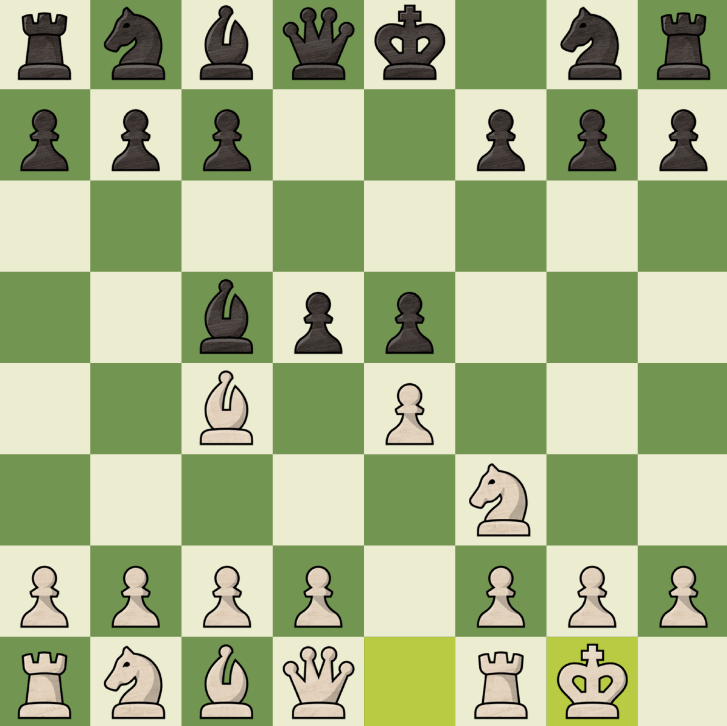

Chess has its fair share of interesting moves, but castling has to be the most visually amusing one of all. Try picturing moving two pieces in one go and imagine your rook leaping right over your king. It’s a wild sight the first time you see it.
But don’t worry, it’s 100% legit. While the idea of this move might seem a little too good to be true, the good news is that it is one of the rules of the game, and one that’s super useful to understand because let’s face it, this move can be a game-saver.
What is Castling in Chess
Castling is a real move that actually lets you move not one, but two pieces at the same time. It’s the only time in a game of chess where you get to move two pieces on the same turn, talk about a special get out of jail free card. So how does it work then?
First off, the king moves two squares over in the general direction of the rook. Then the rook jumps over the king. After that, you get to make all this happen in just one turn.
The real point of all this castling business is to keep your king safe; think of it like tucking your king in at night, all snug and sound with a layer of pawns protecting it. The rules of castling might seem a bit hard at first, but honestly, once you get the hang of them, they become second nature. Give it a go a few times.
Two Types of Castling
There are actually two ways to castle.
Kingside Castling: This is by far the most common type, the King and Rook combo. The King moves in towards the Rook on the right, two whole squares. Then the Rook jumps straight over and lands right next to the King. This usually gives the king a very safe position.
Queenside Castling: This also happens when the Rook is on the left side of the board. The crazy thing is, the King still moves those exact two squares, even though the Rook is a fair bit further away than the one on the right. The king always moves two squares.
When Are You Allowed to Castle?
You cannot just castle anytime you want. There are several conditions which must be true first.
1. Nothing can be between the King and Rook: The squares between the king and rook must be empty. If another piece is standing in the way, castling is not allowed.
2. The King cannot have moved before: Once your king moves, even for one turn, you lose the right to castle for the rest of the game.
3. The Rook cannot have moved before: The rook involved in castling must also stay unmoved. If you move one rook earlier in the game, you may still castle with the other rook if it has never moved.
4. You cannot Castle while in Check: If your king is currently under attack, you are not allowed to castle. First, you must escape the check normally.
5. The King cannot move through Check: This is a rule many beginners forget. If a square the king passes through is being attacked by an enemy piece, castling is illegal. Even if the king ends safely, it still cannot cross a dangerous square.
The Rules for Castling in Chess clearly say the king must stay safe the entire time.
6. The King cannot land in Check: Your king also cannot finish the move on a square under attack. Kings are dramatic like that; they refuse to walk into danger.
Just remember:
- The king always moves two squares.
- The rook jumps over.
- The king must stay safe the whole time.
Master the Rules for Castling in Chess, keep your king cosy behind its pawn blanket, and you’ll already be playing smarter chess!