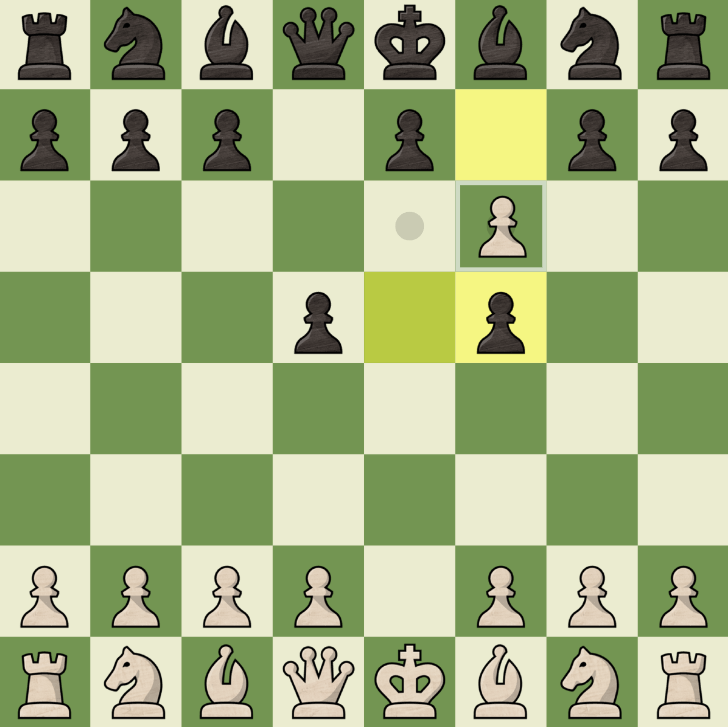

Chess is full of clever tricks, surprise attacks, and strange rules. One of the weirdest and most confusing rules is the En Passant Rule in Chess.
What Does “En Passant” Mean?
The phrase En Passant comes from old French, and in simple terms, it means ‘in passing’, which is a pretty big giveaway about how this particular move works.
The En Passant Rule in Chess was born out of changes to the rules of the game a long time ago. At one point, pawns only moved forward a single square, but then things got tweaked, and players were allowed to chuck a pawn two squares down the board on its very first move. The idea was to speed up the game. This led to a problem, though.
Occasionally, a pawn would just move past an opponent’s pawn without the opponent having a chance to grab it. Pretty frustrating! People thought that was just not right, so the En Passant Rule in Chess was introduced to sort it out.
How Does The Rule Work?
Alright, let’s get to the simple bit: your opponent goes and moves a pawn two squares on its first move. That pawn ends up right next to your pawn. On your very next go, you can grab it as if it had only moved one square along.
That’s the beauty of the En Passant Rule. The catch: it happens diagonally just the same as any other pawn capture. After the move, the enemy pawn just disappears from the board.
The Important Catch
This rule only works immediately.
If your opponent moves the pawn two squares and you do not capture it on your very next move, the chance disappears forever. You cannot wait three turns and then suddenly say, “Oh yeah, en passant!” The opportunity lasts for one move only.
This is what makes the En Passant Rule in Chess tricky. You must notice the chance right away.
Why Is This Rule Important?
Some players think en passant is just a random, funny rule, but it can actually change games. Here’s why it matters:
1. It Prevents Pawns From Escaping: Without this rule, pawns could safely rush past enemy pawns using the two-square move. The rule keeps the game balanced.
2. It Creates Tactical Opportunities: Smart players use en passant to open lines, attack kings, or destroy pawn structures.
3. It Tests Your Awareness: The En Passant Rule in Chess rewards players who pay close attention during the game.
Why Beginners Get Confused
Many new players have never heard of this rule before. If you use it in a casual match, people might stare at you like you invented a new chess move yourself!
That confusion happens because the move looks unusual. You capture a pawn that is not even on the square where your piece lands. But don’t worry, it is 100% official and part of standard chess rules. Even top grandmasters use the En Passant Rule in Chess in professional tournaments.
Tip to Remember It
A simple way to remember en passant is this: If a pawn zooms past you too fast, you can stop it immediately. That little memory trick helps many beginners understand the rule faster.
So next time someone pushes a pawn two squares beside yours, keep your eyes open. You might have the perfect en passant opportunity waiting for you!